Water and fire damageBy Pro Elite Builders, PA HIC #PA215210Checked 4 min read
The short answer
Two things tell you the source: where the stain is and when it grows. Under a bathroom, suspect plumbing. On the top floor after rain, suspect the roof. Along an outside wall in a cold snap, suspect an ice dam. Near a bath fan in winter with no rain, suspect condensation.
The stain is often not directly below the leak. Water runs along framing and pipes before it drops.
Clues and likely sources
| Clue | Likely source | How to check |
|---|---|---|
| Top-floor ceiling, grows after rain | Roof or flashing | Look in the attic with a flashlight during rain |
| Near a chimney or where a roof meets a wall | Flashing | Check the metal and sealant at that joint |
| Along an outside wall, in freezing weather with snow on the roof | Ice dam | Look for ice at the eave above |
| Below a bathroom, grows after showers | Shower pan, drain, or failed caulk and grout | Run the shower with nobody in it, then test the drain alone |
| Below a toilet, any time | Wax ring or supply line | Check for a loose toilet or a damp floor at its base |
| Grows steadily, rain or shine | Pressurized supply pipe | Read the water meter with every tap closed |
| Near a bath fan or ducts, in cold weather | Condensation | Check that the fan duct is insulated and ends outdoors |
| Below attic air conditioning equipment, in summer | Clogged condensate drain | Look at the drain pan under the unit |
If it is the roof
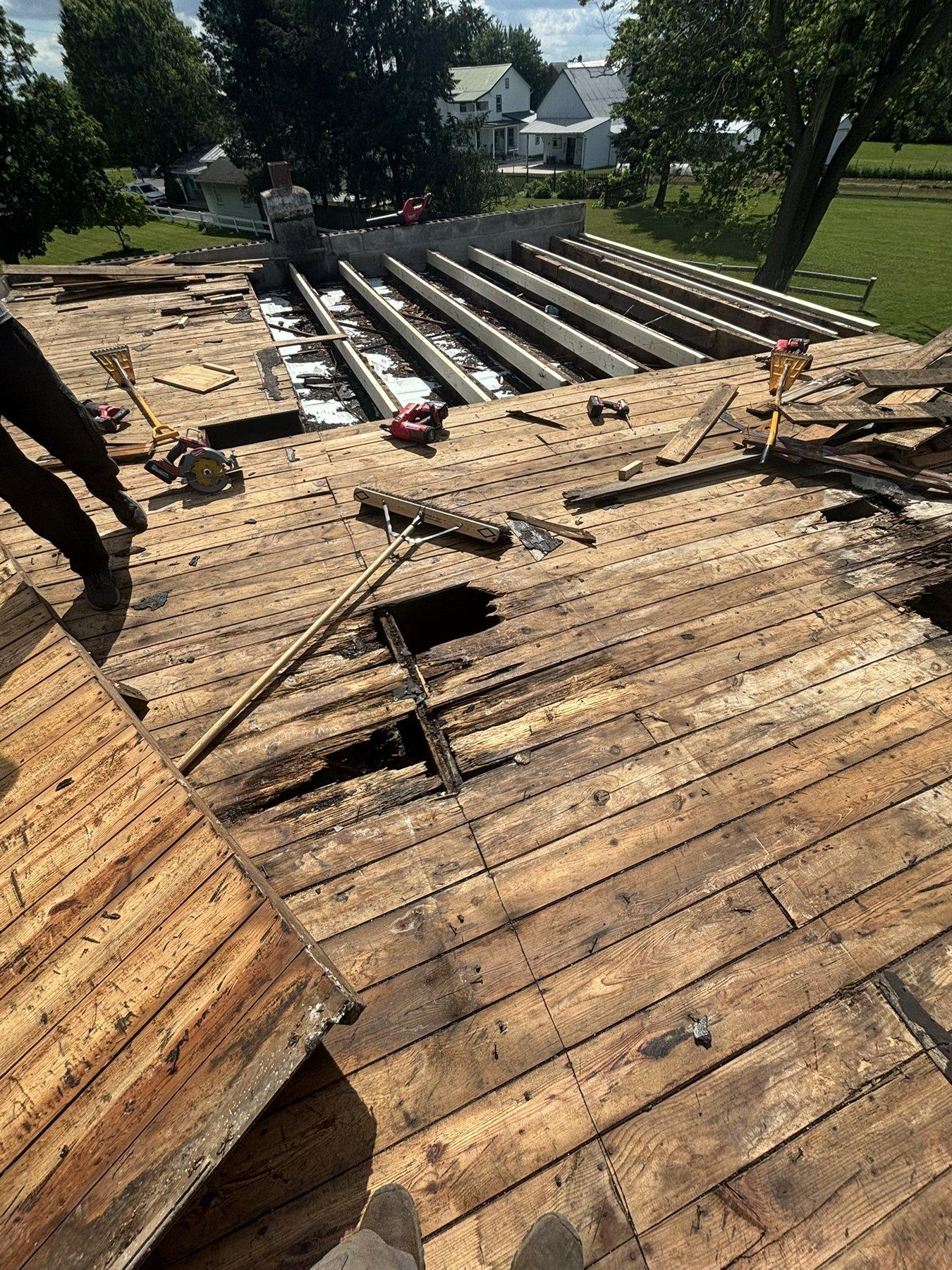
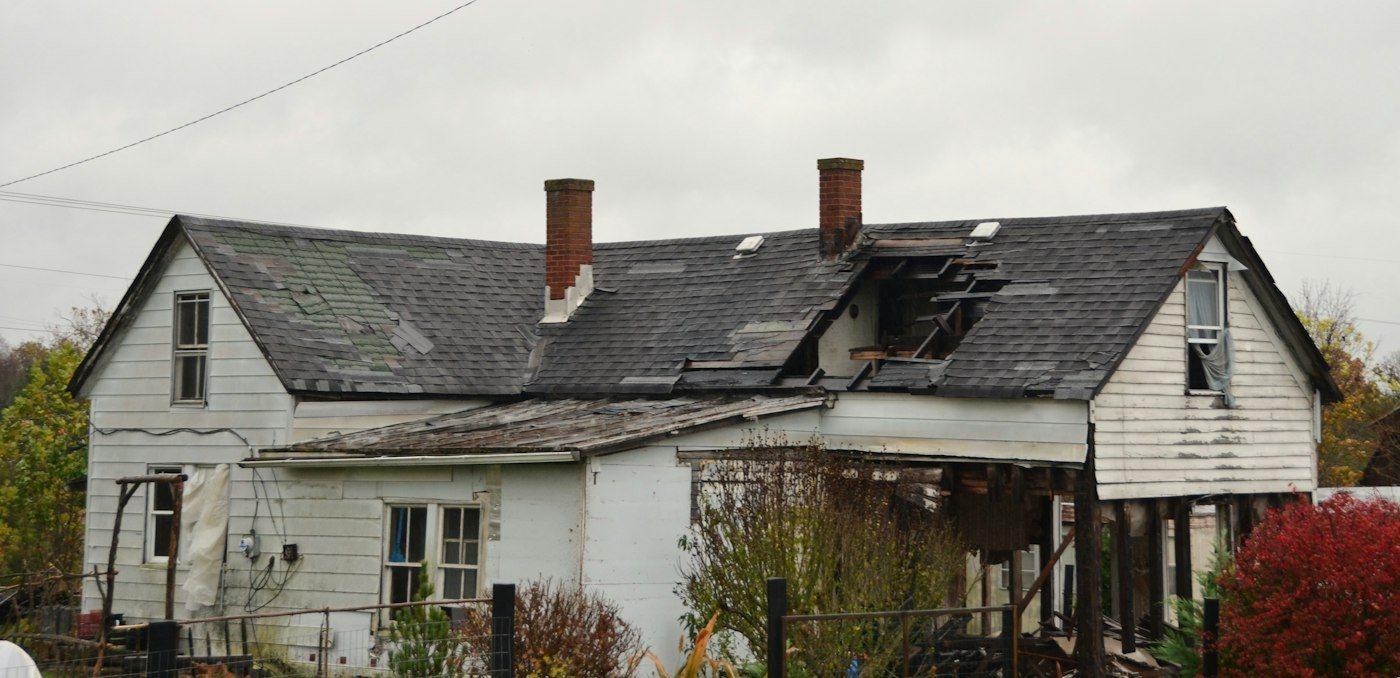
Roofs seldom leak through the open field of shingles. They leak at the places where something interrupts them:
- the rubber boot around a plumbing vent pipe, which cracks with age;
- flashing at a chimney or along a wall;
- valleys, where two slopes meet and carry the most water;
- skylights;
- nails that have backed out and lifted a shingle.
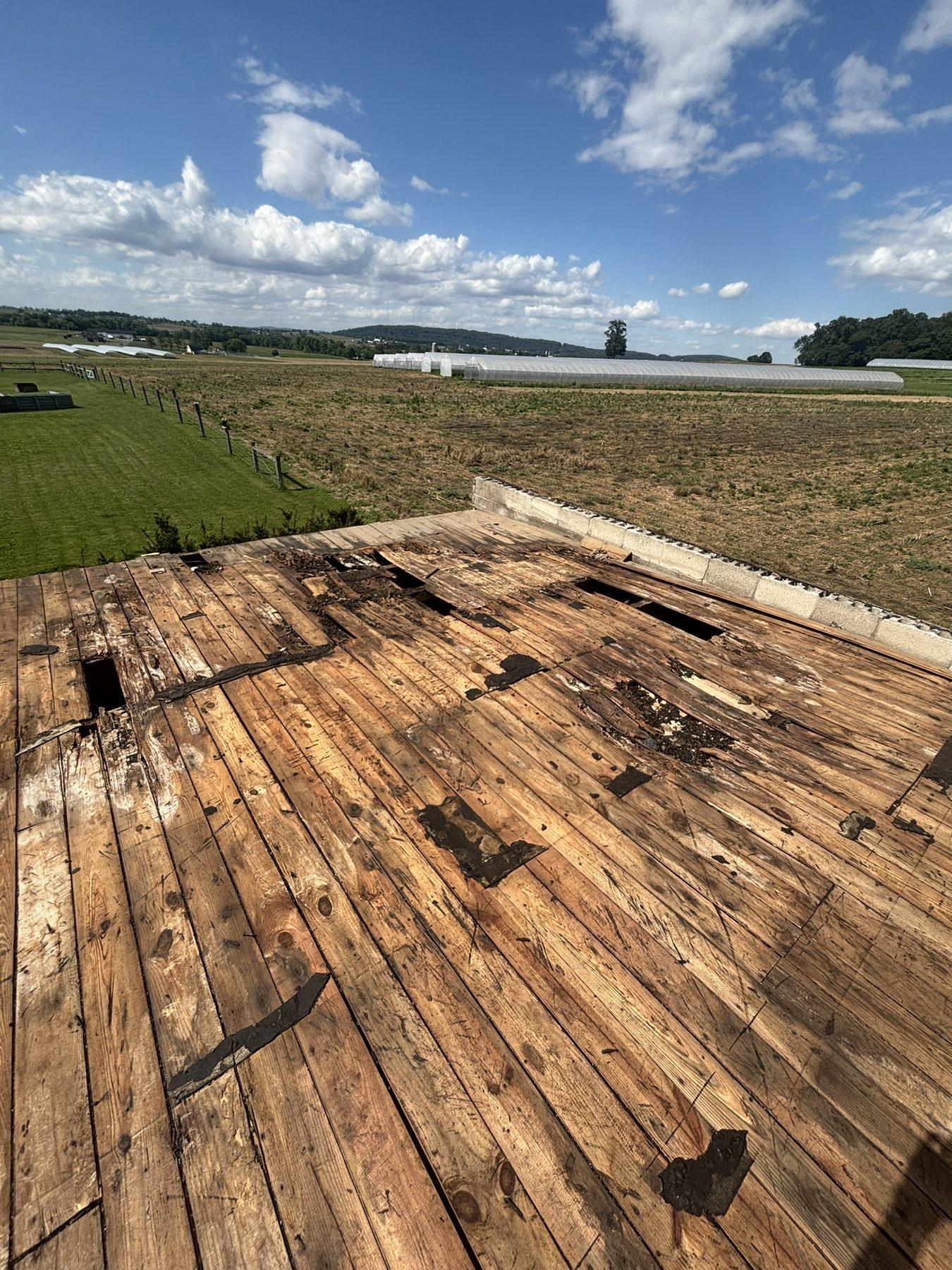
In the attic, follow the wet or stained wood uphill to its highest point. That is the entry. On a flat roof the usual suspects are the edges, the seams and any spot where water stands.
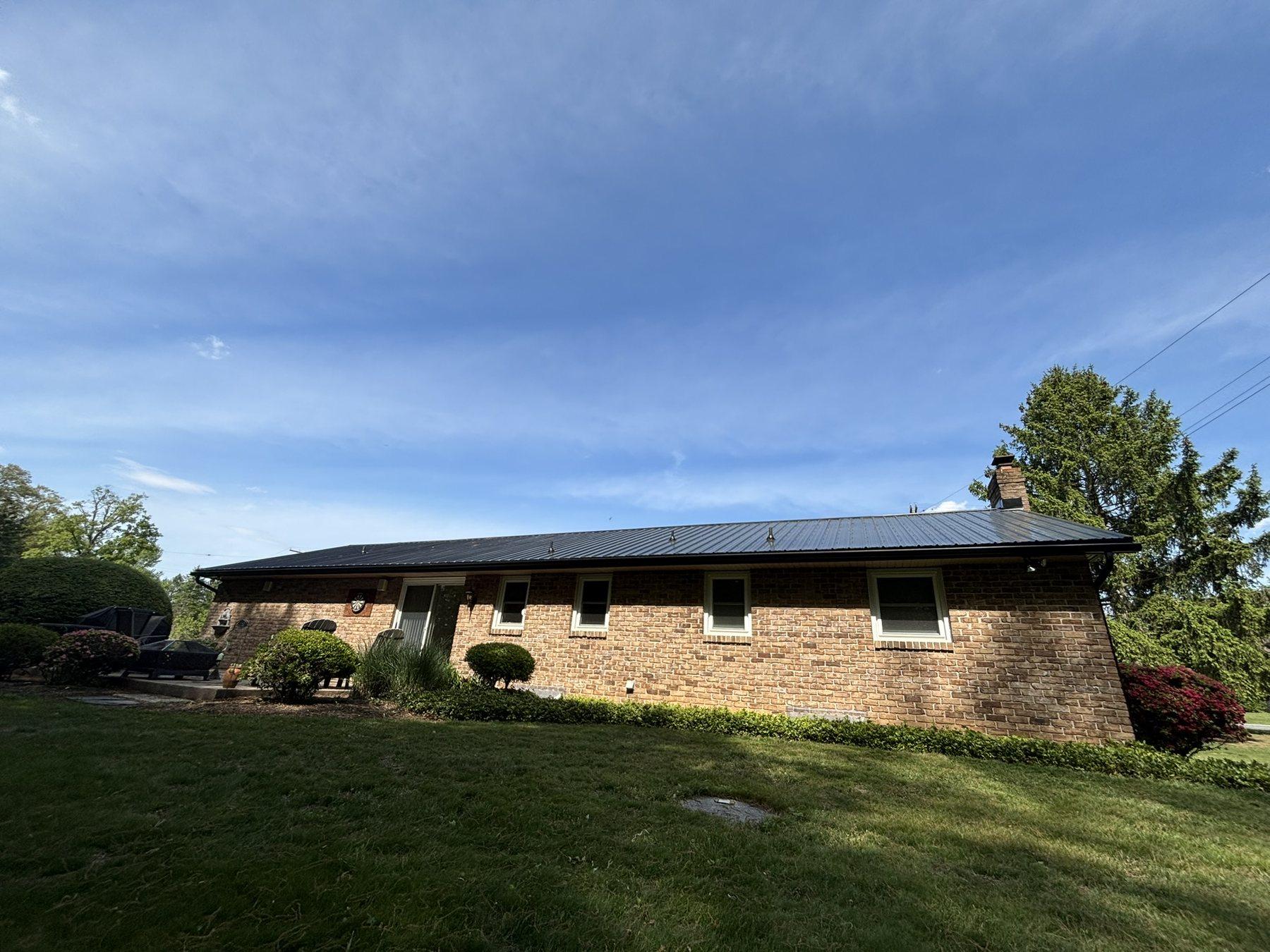
 West Earl Township · May 2026
If it is under a bathroom
- Test the supply side. With no water running, watch the stain for a day. Growth points to a supply pipe or a toilet supply line.
- Test the drain. Pour a bucket of water straight down the tub or shower drain. A leak now is in the drain or trap.
- Test the pan and walls. Run the shower on the walls and floor without filling the drain test again. A leak now is in the pan, the tile or the caulk.
- Test the toilet. Flush several times. A leak at the base means the wax ring.
If it is condensation
Not every stain is a leak. A bath fan duct that runs uninsulated through a cold attic collects water inside and drips it back at the fan. A duct that has come loose fills the attic with steam, which freezes on the roof boards and melts later. See bathroom fan sizing and venting.
Before you paint over it
- Fix the source. A stain painted over a live leak comes back.
- Let the ceiling dry fully.
- Press on it. Soft, sagging or crumbling drywall is cut out and replaced.
- Seal the stain with a stain-blocking primer. Ordinary paint lets the brown ring bleed through.
- Paint the whole ceiling, corner to corner, so the patch does not show.
How Pro Elite Builders helps
Pro Elite Builders works on roofs and on the rooms under them, so we trace the leak, fix the building part of it and repair the ceiling. See water damage restoration and roofing and repair. If water is coming in now, start with the first 24 hours after a leak.
About this guide
General guidance from Pro Elite Builders, last reviewed on November 19, 2026. Every house is different, and product instructions and local codes take priority over anything written here.