Floors, walls and woodBy Pro Elite Builders, PA HIC #PA215210Checked 3 min read
The short answer
Keep plaster that is still firmly attached, and repair its cracks. Replace it with drywall where it has come loose from the lath over a large area, or where the wall has to be opened anyway for wiring, plumbing or insulation.
Press on the wall and knock on it. Solid plaster does not move and sounds dense. Loose plaster gives under your hand and sounds hollow.
What is in the wall
In houses built before about the 1940s, walls are usually plaster on wood lath: thin strips nailed across the studs with gaps between them. Wet plaster was pushed through the gaps and hardened into lumps behind the lath, called keys. The keys hold the wall up.
The whole assembly is close to an inch thick, about twice the thickness of drywall. Old rooms feel solid and quiet because of it.
Two ways plaster fails
- Cracks. Lines across a wall or ceiling where the house has moved. The plaster on both sides is still attached. This is cosmetic.
- Delamination. The keys have broken and the plaster has let go of the lath. It bulges, sounds hollow and moves when pressed. On a ceiling it can fall.
Five repair options
| Condition | Repair |
|---|---|
| Cracks in solid plaster | Open the crack, tape it and fill with setting-type compound |
| Loose but unbroken plaster | Fasten it back to the lath with plaster washers or adhesive, then skim over |
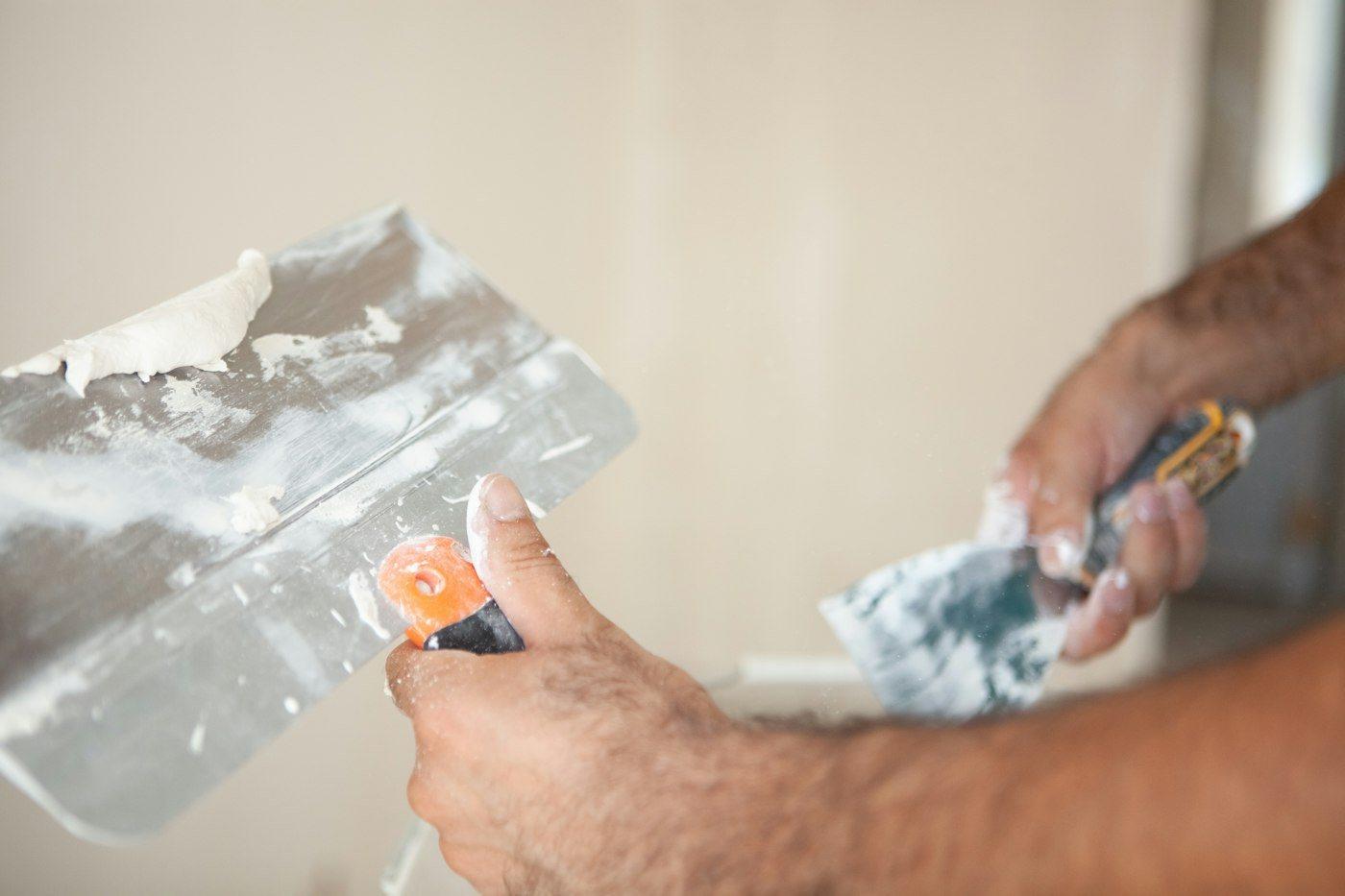
| A missing section | Fill the hole with a piece of drywall shimmed flush, then tape and finish the edges |
| A surface covered in fine cracks or rough old patches | Skim coat the whole wall, or cover it with a thin layer of drywall |
| Loose over most of the wall, or the wall must be opened | Remove plaster and lath and hang new drywall |
Reasons to keep plaster
- It is harder and thicker than drywall, and it blocks more sound.
- It follows the gentle curves of old walls, where flat drywall would show every wave.
- The original trim was fitted to its thickness.
- Removing it is the dustiest job in remodeling.
Reasons to replace it
- The wall has to open for new wiring, plumbing or insulation.
- The plaster is loose over most of a ceiling.
- The cost of repairing a badly damaged wall is higher than the cost of replacing it.
The thickness problem
Half-inch drywall on bare studs sits well behind the line of the old plaster. Door and window casings then stand proud of the wall, and outlets sit too far forward. The fix is to shim the studs out or use a thicker build-up so the new surface lands where the old one was. Plan for it before the plaster comes down.
Dust and old paint
Plaster demolition fills a house with fine dust unless the room is sealed off. Homes built before 1978 may have lead-based paint on those walls, and federal rules govern how contractors disturb it. The EPA explains them on its renovation, repair and painting page.
Plaster and drywall repair with Pro Elite Builders
We repair plaster and drywall, and on a larger remodel we replace walls that have to open. See drywall repair and whole-home remodeling. For a house full of plaster, read renovating a row home in Lancaster.
Sources
We read these on November 19, 2026. Rules, codes and local ordinances change, so confirm with your municipality before you rely on any of this.