Floors, walls and woodBy Pro Elite Builders, PA HIC #PA215210Checked 3 min read
The short answer
Stain peels when it sits on top of the wood as a film and the film loses its grip. The usual reasons are damp wood, a dirty or gray surface, old finish underneath, or too much product put on at once.
The cure is preparation: remove the failing finish, clean and brighten the wood, let it dry fully, sand what is rough, and apply thin coats that the wood can absorb.
Stains that soak in and stains that form a film
A penetrating stain soaks into the wood. When it wears out, it fades and the wood turns gray. It does not peel, because there is no layer to lift.
Solid-color stains and some semi-solids leave a film on the surface. A film blocks more sun and lasts longer. When moisture gets behind it, it lets go in sheets. Horizontal boards, which hold water and get walked on, are where films fail first.
Six causes of peeling
- Damp wood. Stain applied to wood that had not dried after rain or washing. Many labels call for a moisture content of about 15 percent or less.
- Dirt, mildew and gray fibers. Weathered wood has a loose layer on top. Stain sticks to that layer, and the layer comes off.
- Mill glaze. New smooth lumber can have a hard, shiny surface from the mill that stain cannot enter.
- Too much stain. Whatever the wood cannot absorb dries on top as a skin.
- Old finish underneath. New stain over a failing coat fails with it.
- Water from below. A deck close to the ground with no air moving under it stays damp, and moisture pushes the finish off from behind.
The prep sequence
- Inspect and repair. Replace soft or split boards and reset raised fasteners first.
- Strip what is failing. Peeling film comes off with a stain stripper or by sanding. New stain cannot bond through it.
- Clean. An oxygen-based deck cleaner lifts dirt, mildew and gray fibers.
- Brighten. A wood brightener neutralizes the cleaner and restores the color of the wood.
- Rinse gently. Low pressure and a wide fan tip. High pressure tears the grain and leaves the boards fuzzy.
- Dry. At least two dry days, more in shade or cool weather.
- Sand the rough spots. A light pass knocks down raised grain and opens the surface.
- Apply thin. Work a few boards at a time, brush the stain into the wood, and wipe up puddles.
Switching from a solid stain to a penetrating one
It can be done, and it is the hardest job in deck finishing. Every bit of the old film has to come off, down to bare wood, on the floor and between the boards. Many owners keep the solid color and recoat it, and accept that it will need scraping and touch-ups.
When the boards are the problem
Stain protects sound wood. It does not repair wood that is soft, deeply cracked or cupped. If a screwdriver sinks into a board, replace the board. If most of the floor is like that, compare the price of new decking with the price of repeated prep and stain.
Our prep before staining
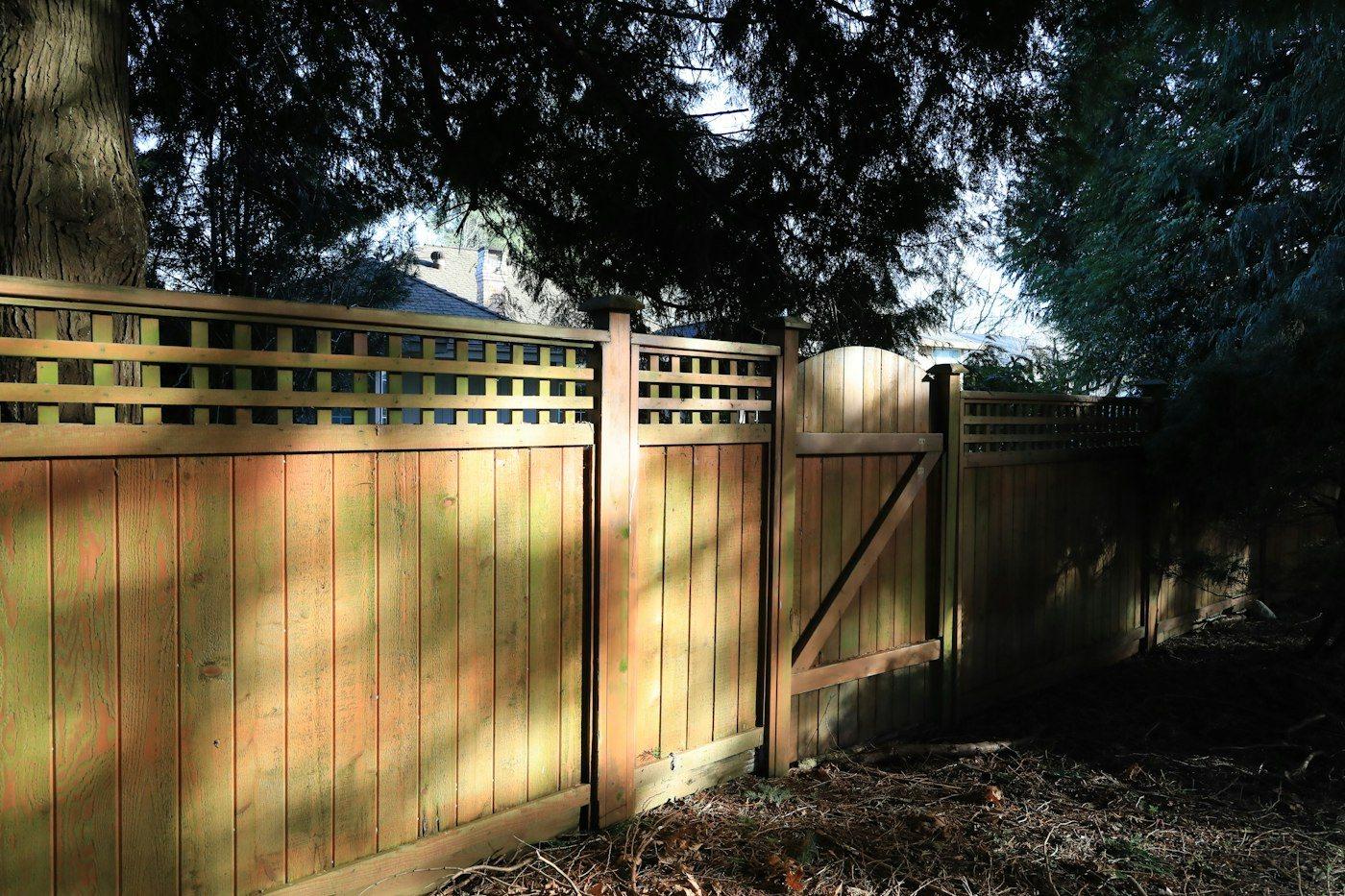
We clean, repair and prepare the wood before any stain goes on, on decks, fences and arbors. See fence, deck and arbor staining, and for timing, how often to stain a deck in Pennsylvania.
About this guide
General guidance from Pro Elite Builders, last reviewed on November 19, 2026. Every house is different, and product instructions and local codes take priority over anything written here.